
-
Shop
- Start Here
- Best Sellers
- What's New
- Brands
- Activated Probiotics
- Bioclinic Naturals
- Biogaia
- BiotiQuest
- Bodybio
- Cellcore
- FIQ
- Flordis
- Gelpro
- Kefirko
- Low D
- Masontops
- MedLab
- Melbourne Hot Sauce
- Metabolic Maintenance
- Microbiome Labs
- Mito Wellness
- Mother Dirt
- Nourishme Organics
- Preventa
- Provenir
- Pure Encapsulations
- Qenda
- Quicksilver Scientific
- Researched Nutritionals
- Thorne
- VSL3
- Vivomixx
- Starter Cultures
- Bundles
- Allergic Rhinitis
- Anti-Ageing
- Australian Made
- Beauty
- Biohacking
- Bone Broth
- Books
- Candida
- Cheese
- Children
- Cleaning
- Collagen
- Colostrum
- Constipation
- Detox
- Deuterium Depleted Water
- Diarrhea
- Dietary Fibre
- Digestive Enzymes
- Dysbiosis
- Erectile Dysfunction
- Fat Loss
- Fermentation
- Fermented Vegetable
- Fine Foods
- Garden
- Gift Cards
- Gut Health
- Hair Loss
- Heavy Metals
- H pylori
- IBS/ IBD
- Immune Health
- Kefir
- Kombucha
- Leaky Gut
- Low FODMAP
- Medicinal Mushrooms
- Menopause
- Mental Health
- Microbiome
- Microbiome Consultation
- Miso, Koji, Natto
- Mitochondrial Health
- Mould
- Multivitamins
- Oral Health
- Organic
- Paleo/ Carnivore
- Pantry
- Parasites
- Pet Health
- Postbiotics
- Prebiotics
- Prepping
- Probiotics
- Red Light Therapy
- Reflux
- Rheumatoid Arthritis
- Root Cause Protocol
- Second Fermentation
- SIBO
- Skin Care
- Sleep
- Sourdough
- Sports Nutrition
- Sprouting
- Stress
- Supplements
- Tempeh
- Testosterone
- Toilet Stool
- Travel
- Vegan
- Weight Loss
- Yoghurt
- Zeolite
-
Shop
- Shop All
- Start Here
- Best Sellers
- By Product
- Yoghurt
- Kefir
- L reuteri
- Prebiotics
- Starter Cultures
- Fermentation Accessories
- Deuterium Depleted Water
- Food Supplements
- Probiotics
- All Natural Food
- Kombucha
- Fermented Vegetables
- Australian Made
- Books
- Carnivore
- Cheese
- Collagen
- Colostrum
- Dietary Fibre
- Digestive Enzymes
- Fine Foods
- Gift Cards
- Microbiome
- Miso, Koji, Natto
- Mushrooms
- Natural Extracts
- Organic Tea
- Postbiotics
- Red Light Device
- Second Fermentation
- Sourdough
- Sports Nutrition
- Sprouting
- Tempeh
- Tofu
- Zeolite
- By Brands
- Home & Beauty
- My Rewards
- My Orders
-
Learn
- Podcast
- Videos
- Recipes
- Support Group
- Beginners Start Here
- Fermentation Workshop
- Interactive Online Kefir Class
- Ultimate Guides Series
- Second Fermentation
- How to Make:
- Milk Kefir
- Water Kefir
- Coconut Milk Kefir
- Coconut Water Kefir
- Almond Milk Kefir
- Kombucha
- Jun Kombucha
- Viili
- Filmjolk
- Second Fermentation
- Dried Milk Kefir Grains
- Dried Water Kefir Grains
- Koji Rice
- White Miso
- Tempeh
- Probiotic Yoghurt
- Fermented Vegetable
- Vegan Coconut Yogurt
- Sprouts
- Natto
- Sourdough Levain
- Apple Cider Vinegar
- Sour Cream
- Fermented Buttermilk
- Cultured Butter
- L reuteri Yoghurt
- SIBO Yoghurt
- L gasseri Yoghurt
- Rhamnosus Yoghurt
- Tofu
- S boulardii Sparkling Soda
- Paneer
- Sauerkraut
- Easy Kefir in a Yoghurt Maker
- Probiotic Soy Yoghurt
- What is Kefir
- What is Kombucha
- DDW Dilution Calculator
- Reuteri Yoghurt Timer
- Reviews
- About us
- Blog
- Podcast
- Contact Us

How To Make Milk Kefir
Ingredients
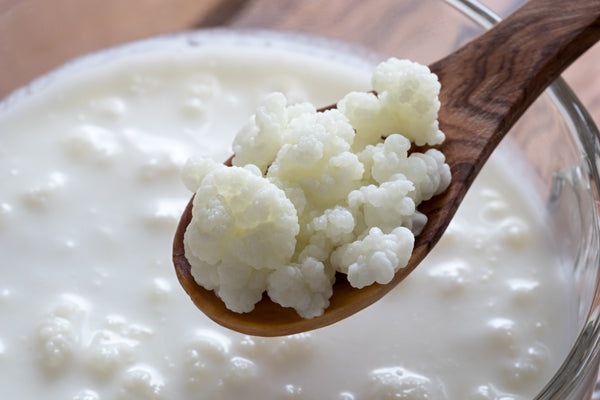
• 5g Organic Milk Kefir Grains
• 250ml of milk (we recommend organic, goat or jersey cow milk like A2 milk)
Optional extra ingredients
• 15g of milk kefir growth premix or 5 g of pure colostrum powder
You will also need a glass jar or a Kefirko Kefir maker (available on our website) for fermenting
• 250ml of milk (we recommend organic, goat or jersey cow milk like A2 milk)
Optional extra ingredients
• 15g of milk kefir growth premix or 5 g of pure colostrum powder
You will also need a glass jar or a Kefirko Kefir maker (available on our website) for fermenting
Instructions
#Start fermenting as soon as you received your grains. It takes a few batches for grains to acclimatise to your environment and consistency is the key to success.
Acclimatisation Step for first 3 batches Only:
1. Pour 125 ml of milk into a jar. If you are adding the growth premix or colostrum, you can add these ingredients at this point and mix well.
3. Add the 5 g of milk kefir grains. Loosely close lid.
4. Leave on the counter out of the direct sunlight or in a cupboard (preferably at 21 to 30 degrees celsius) for 12 to 48 hours (in hot weather, if ferments faster) - taste it as you go to get a feel for what 1 day milk kefir and 2 days milk kefir tastes like. The longer you leave to ferment, the more tart and more separated the kefir milk will be.
The ideal kefir should smell yeasty, taste slightly tart and just starts to separate to curds and whey.
5. Shake the bottle regularly during fermentation ( a good way to remember is every time you walk pass)*
6. After 12 to 48 hours (depending on your tastes), strain the kefir milk through a mesh strainer (or the in-built strainer if you have a Kefirko kefir maker), pouring the milk kefir into another container. If using a strainer, it helps to push the kefir milk through by stirring with a wooden spoon to leave only the milk grains behind.
Ongoing Steps After Acclimatisation phase has been completed:
1. Pour 250 ml of milk into a jar. If you are adding the growth premix or colostrum, you can add these ingredients at this point and mix well.
3. Add the 5 to 10 g of milk kefir grains. Loose cover jar with lid. If using a kefir maker leave lid slightly open.
**To keep alcohol as low as possible, ferment with kefir maker lid slightly open
4. Leave on the counter out of the direct sunlight or in a cupboard (preferably at 20 to 30 degrees celsius) for 12 to 48 hours (in hot weather, if ferments faster) - taste it as you go to get a feel for what 1 day milk kefir and 2 days milk kefir tastes like. The longer you leave to ferment, the more tart and more separated the kefir milk will be.
The ideal kefir should smell yeasty, taste slightly tart and just starts to separate to curds and whey.
5. Shake the bottle regularly during fermentation ( a good way to remember is every time you walk pass)*
6. After 12 to 48 hours (depending on your tastes), strain the milk kefir through a mesh strainer (or the in-built strainer if you have a Kefirko kefir maker), pouring the kefir milk into another container. If using a strainer, it helps to push the milk kefir through by stirring with a wooden spoon to leave only the milk grains behind
7. You may drink the kefir as is, or as per below, you may further ripen the kefir (see below).
8. To make a new batch of kefir, add these retrieved grains to fresh milk and repeat the process.
9. Bottle and store your kefir milk refrigerated.
10. You may also chose to second ferment as per instructions here to improve to flavour, texture and nutritive value.
*Shaking the fermenting kefir prevents the formation of yeasts and acetobacter colonies from forming on the surface. If colonies form they will appear as a light-brown wavy film. Skim this off, discard the film and use the kefir.
Ripened Kefir (optional)
Once you’ve strained out the kefir grains, you may choose to ripen kefir at room temperature for a day or two prior to consuming it. Ripening will increase some of the B group vitamins. As the kefir ripens, the thick creamy kefir floats above the watery whey. Shake or stir to blend the ingredients. Once it has ripened, refrigerate it.
Dosage
We recommend starting with a tablespoon and working up to consuming one cup per day.
Storage
When you are not fermenting, milk kefir grains need to be kept refrigerated by placing in fresh milk for up to 2 week in fridge. Milk kefir grains can also be frozen for up to 2 years by first mixing with milk powder and sealing in a zip lock bag. Please note that the grains coming out of cold storage will take a few batches before returning to original potency.
Prepared Milk kefir is best consumed with 2 weeks.
**Advisory Statement
All fermented foods may contain trace amounts of alcohol. If fermented foods are being prepared for children, breastfeeding mothers, or pregnant women please seek medical advice from a trained medical practitioner before consuming these products.
To keep alcohol as low as possible, make sure that:
- in step 3 the kefir maker/ jar was slightly open
- consume within 24 hours as alcohol content will increase over time in refrigerated storage
Milk Kefir FAQ
What do I need to make milk kefir?
You need 5g of organic milk kefir grains and 250ml of milk (organic, goat, or A2 cow's milk is recommended). Optional extras include 15g of milk kefir growth premix or 5g of pure colostrum powder. You'll also need a glass jar or a Kefirko kefir maker for fermenting.
Do I need to do anything special with new kefir grains?
Yes. Start fermenting as soon as your grains arrive. For your first 3 batches, use a smaller ratio of 125ml milk to 5g of grains. This acclimatisation period lets the grains adjust to your environment, and consistency during this phase is key to success.
How long does milk kefir take to ferment?
Milk kefir takes 12 to 48 hours to ferment at 20 to 30 degrees Celsius, out of direct sunlight. It ferments faster in hot weather. Taste as you go, since the longer it ferments the more tart and separated it becomes.
How do I know when my milk kefir is ready?
Ideal milk kefir should smell yeasty, taste slightly tart, and just be starting to separate into curds and whey.
Why do I need to shake the jar during fermentation?
Shaking the jar regularly, for example every time you walk past it, prevents yeast and acetobacter colonies from forming on the surface. If a light-brown wavy film does form, simply skim it off and discard it. The kefir underneath is still fine to use.
What do I do once my milk kefir has fermented?
Strain the kefir through a mesh strainer, or the in-built strainer if using a Kefirko kefir maker, stirring with a spoon to push the liquid through and leave the grains behind. Use the retrieved grains to start your next batch in fresh milk.
Can I ripen or second ferment my kefir?
Yes. You can ripen strained kefir at room temperature for a day or two to increase some B-group vitamins, then shake or stir to recombine before refrigerating. You can also second ferment your kefir to improve flavour, texture, and nutritive value.
How much milk kefir should I drink per day?
Start with a tablespoon and gradually work up to consuming around one cup of milk kefir per day.
How do I store milk kefir grains when I'm not fermenting?
Keep milk kefir grains refrigerated in fresh milk for up to 2 weeks. For longer storage, mix the grains with milk powder and freeze in a zip lock bag for up to 2 years. Grains coming out of cold storage will take a few batches to return to their original potency.
How long does prepared milk kefir last?
Prepared milk kefir is best consumed within 2 weeks when kept refrigerated.
Does milk kefir contain alcohol?
All fermented foods may contain trace amounts of alcohol. To keep alcohol as low as possible, ferment with the lid slightly open and consume within 24 hours, as alcohol content increases over time in refrigerated storage. If preparing kefir for children, pregnant women, or breastfeeding mothers, please seek medical advice from a trained practitioner before consuming.
Let customers speak for us
First time using gelatine so I can’t differentiate the difference between other brands but it worked very well making collagen fruit jelly very dense & exactly how I wanted it :)
Zuhal y.

Great product as described and fast delivery 🚚
Dow P.

Borax
Fantastic product I've been using this for 2 years now and wouldn't use any other brand.
Angela

Excellent sprouts
These seeds, along with the sprouting bottle kit and instructions have made me delicious sprouts. First time I have done this successfully.
Thanks.
Mrs H.

easy as
Very simple.
We use it for greek style yoghurt and in between we do the l gasseri and l reuteri.
There is nothing difficult about it .
Just follow the instructions
Justin S.

I was a bit sceptic to use it for baking but I made my brioche dough , and it was a winner. I like the taste of it and will be using it in my future pastries as well as hot beverages, fruit salad ! I will definitely repurchase ♥️
Cassie L.

Loving it
I recently purchased the full package for Reuter-i. Its super easy and I am now on my 3rd round with no dramas. The system fits easily on my counter as its quite small which i love. The yogurt is delicious and I really keen to try some other foods soon. This has replaced our normal Yogurt shop which is great and the whole family - including extended family has been converted - no more crappy shop yogurt!
Briget G.

Great recipes and ideas
Brooke

Works well with the water kefir I find it a bit hard to use with milk one , but too thick to go through .. such a clever invention though
Brooke

Great recipes to use
Brooke

Excellent products .. an addition to my original kickstarter ones .
Brooke

So nifty to help keep track of time! One less thing to remember
Sarah

Fantastic pack. Easy to use and has been creating kefir for over a year, the teenagers now do it all.
Sarah

Great product. Reliably keeps the grains growing and creating great kefir.
Sarah

L Reuteri
Great stuff
Jennifer G.